Source Heat Shrink Fiber Optic Enclosure for Telecom, Data, and Lighting
Find 30 heat shrink fiber optic enclosure options with varying capacities, sizes, and certifications. Compare specifications like IP68 protection, working temperature ranges, and cable port configurations from suppliers in China to select the right solution for your network infrastructure.
Key considerations
Products List


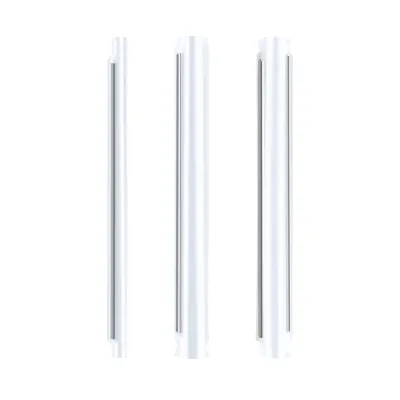

Comprehensive Sourcing Guide
Strategic Sourcing Guide for Heat Shrink Fiber Optic Enclosures
The global telecommunications infrastructure relies heavily on the integrity of fiber optic connections, particularly in outdoor and harsh environments. When sourcing a heat shrink fiber optic enclosure, buyers must navigate a complex landscape of technical specifications, material standards, and compliance requirements. This guide provides a disciplined approach to evaluating potential suppliers and products, ensuring that the selected equipment meets the rigorous demands of modern network deployment. The focus remains on evidence-based criteria derived from observed market data and established industry standards, avoiding unverified claims while highlighting critical verification points for procurement professionals.
Technical Specifications and Dimensional Analysis
The physical attributes of a heat shrink fiber optic enclosure are the primary determinants of its suitability for a specific installation. Unlike generic protective sleeves, enclosures designed for fusion splicing and cable management must offer precise dimensional compatibility with the fiber count and cable diameter. Market observations indicate that available models vary significantly in size, with common dimensions ranging from compact units measuring 145530mm to larger configurations such as 200500mm and 230*320mm. The selection process must begin with a clear understanding of the cable diameter to be protected, as the enclosure's internal capacity must accommodate the cable without excessive stress or insufficient sealing.
Capacity is another critical technical parameter. High-performance units are often rated for specific core counts, with observed capacities reaching up to 144 cores for single-core configurations. This capacity is frequently managed through integrated splice trays, where a single tray might hold 24 single fibers. Buyers must verify the relationship between the total enclosure capacity and the number of available splice trays to ensure the system can handle the required fiber density. Furthermore, the number of cable ports is a vital specification; observed data shows configurations ranging from 2 to 6 ports, with some models offering specific arrangements such as 4 pieces (2 inlet + 2 outlet). The sealing structure, often described as a sticky cincture or similar mechanism, must be compatible with the cable diameter range, typically observed between Φ7Φ18 mm or Φ10Φ20 mm, to ensure a watertight seal.
Compliance and Certification Verification
In the B2B procurement of fiber optic infrastructure, compliance is not merely a formality but a prerequisite for market entry and operational safety. The supply chain for heat shrink enclosures is characterized by a diverse array of certifications that validate the product's adherence to international safety and environmental standards. A thorough due diligence process must confirm that the supplier provides documentation for certifications such as CE, RoHS, ISO, UL, ETL, and CCC. The presence of these marks indicates that the product has undergone testing for electrical safety, electromagnetic compatibility, and the restriction of hazardous substances.
Specific standards play a pivotal role in the evaluation process. For instance, the ISO9001 standard is frequently cited as a benchmark for quality management systems, ensuring that the manufacturer maintains consistent production processes. Additionally, the UL and ETL marks are essential for products intended for use in North American markets, verifying compliance with specific fire and electrical safety codes. The RoHS directive is equally critical, particularly for components containing plastics and adhesives, as it restricts the use of lead, mercury, and other toxic materials. Buyers should not rely on a single certification but rather demand a comprehensive compliance matrix that covers the specific region of deployment. The observed data suggests that high-confidence products often carry a combination of CE, RoHS, and ISO certifications, while some advanced models may also include UL and CSA marks.
Cost Drivers and Pricing Dynamics
Understanding the cost structure of heat shrink fiber optic enclosures requires an analysis of several variable factors. The observed price range in the market spans from $0.01 to $200 USD, a wide spectrum that reflects differences in capacity, material quality, and certification levels. The lower end of this range typically corresponds to basic models with fewer cable ports and lower core capacities, often used for simple splicing tasks. Conversely, the upper end of the price range is associated with high-capacity units featuring advanced sealing technologies, robust shock resistance, and comprehensive certification packages.
Material composition is a primary driver of cost. Enclosures constructed from high-grade, UV-resistant polymers with superior thermal stability command a premium over standard plastic alternatives. The inclusion of specialized components, such as high-performance splice trays and advanced sealing gaskets, also contributes to the overall price. Furthermore, the Minimum Order Quantity (MOQ) significantly impacts the unit cost. Market data indicates an MOQ range from 1 to 10,000 units, suggesting that bulk purchasing can yield substantial savings. Buyers must balance the initial unit price against the total cost of ownership, considering factors such as installation time, maintenance requirements, and the potential cost of failure in harsh environments. Customization options, such as specific dimensions or branding, may also introduce additional costs that must be factored into the budget.
Typical Applications and Environmental Resilience
Heat shrink fiber optic enclosures are designed to protect critical network junctions in a variety of demanding environments. The primary application involves outdoor fiber optic splicing, where the enclosure shields the fusion splice point from moisture, dust, and mechanical stress. The observed working temperature ranges for these products vary, with some models rated for -20°C to +60°C and others capable of withstanding -40°C to +70°C. This wide range of thermal tolerance is essential for deployments in extreme climates, ensuring that the enclosure remains functional and sealed regardless of seasonal temperature fluctuations.
Mechanical resilience is equally important. The enclosure must withstand lateral pressure and shock forces that may occur during installation or due to external factors like vehicle impact or falling debris. Specifications indicate that robust units can resist lateral pressure of at least 2000n / 10cm and shock resistance of ≥20n.M. The Protection Grade (IP rating) is another critical metric, with IP68 being a common standard for fully dust-tight and water-immersion-resistant enclosures. These features make the product suitable for underground ducts, aerial installations, and direct burial scenarios. Additionally, the product's ability to accommodate various cable types, including HDMI, DVI, electric wires, and optical cables, highlights its versatility in mixed-utility environments, although its primary function remains the protection of fiber optic splices.
Supplier Evaluation and Quality Control
Selecting a reliable supplier is as critical as selecting the product itself. Buyers should prioritize suppliers who demonstrate transparency in their manufacturing processes and provide clear evidence of their quality control measures. The origin of the product, often cited as China or specifically Zhejiang, Hangzhou, should be verified against the supplier's reputation and track record. A reputable supplier will offer detailed product documentation, including test reports and certification copies, rather than relying on marketing claims.
Quality control should extend beyond the final product inspection to include the raw materials and assembly processes. Buyers should inquire about the supplier's adherence to ISO9001 standards and their internal testing protocols for sealing integrity and mechanical strength. The condition of the product, typically listed as "New," should be confirmed, along with the packaging standards, which often involve standard carton boxes or specific bagging for smaller components like heat shrink sleeves. The availability of customization services is another indicator of a supplier's flexibility and capability to meet specific project requirements. Buyers should also evaluate the supplier's response time and after-sales support, as these factors can significantly impact the success of a procurement project.
Long-Term Procurement Considerations
Sourcing heat shrink fiber optic enclosures is not a one-time transaction but part of a long-term strategy for network maintenance and expansion. Buyers must consider the scalability of the solution, ensuring that the selected enclosures can accommodate future network growth. The modularity of the design, such as the ability to add more splice trays or expand cable ports, is a valuable feature for long-term planning. Additionally, the availability of spare parts and replacement components should be verified to ensure that the network can be maintained without significant downtime.
Sustainability is also becoming a key consideration in procurement. The use of recyclable materials and compliance with environmental regulations like RoHS contribute to a more sustainable supply chain. Buyers should evaluate the supplier's commitment to environmental responsibility and their ability to provide products that align with corporate sustainability goals. Finally, the total cost of ownership, including installation labor, maintenance, and potential replacement costs, should be analyzed to ensure the selected product offers the best value over its lifecycle. By focusing on these long-term factors, buyers can secure a reliable and efficient supply of heat shrink fiber optic enclosures that support the stability and growth of their network infrastructure.
Comparative Analysis of Key Product Attributes
To facilitate a clearer understanding of the variations available in the market, the following table summarizes the key attributes observed in high-confidence product listings. This comparison highlights the diversity in specifications that buyers must evaluate against their specific project requirements.
| Attribute | Observation Range / Common Values | Relevance to Procurement |
|---|---|---|
| Size | 145530mm, 200500mm, 230320mm, 435190*120mm | Determines physical space requirements and cable routing. |
| Capacity | Up to 144 Cores (Single Core) | Defines the maximum fiber count the unit can support. |
| Cable Ports | 2, 3, 4, 5, 6 (e.g., 2 Inlet + 2 Outlet) | Impacts the complexity of cable entry and exit points. |
| Cable Diameter | Φ7 | Must match the specific cable type being installed. |
| Working Temp | -20°C ~ +60°C, -40°C ~ +70°C | Critical for extreme climate deployments. |
| Protection Grade | IP68 | Indicates dust and water resistance levels. |
| Certifications | CE, RoHS, ISO, UL, ETL, CCC, CSA | Mandatory for regulatory compliance in target markets. |
| Material | Heat Shrinkable, Plastic/Polymer | Affects durability and environmental resistance. |
| Weight | 2.8kg, 3.1kg | Influences installation logistics and structural load. |
| Packing | Carton Box, 100PCS / Bag | Affects shipping costs and inventory management. |
This structured approach to evaluating heat shrink fiber optic enclosures ensures that procurement decisions are grounded in verified data and technical reality. By adhering to these guidelines, buyers can mitigate risks and secure high-quality solutions that meet the demanding standards of modern telecommunications infrastructure.
FAQs
What certifications do heat shrink fiber optic enclosures typically have?
These enclosures commonly carry CE, RoHS, ISO, UL, ETL, and CCC certifications. Buyers should verify specific marks like UL or CSA for North American markets and ISO9001 for quality management standards.
Which capacity options are available for single core configurations?
High-performance units often support up to 144 cores in single core configurations. Some models include splice trays holding 24 single fibers each to manage fiber density effectively.
How do working temperature ranges vary across different models?
Operating temperatures typically range from -20°C to +60°C or -40°C to +70°C depending on the specific model. This thermal tolerance ensures functionality in extreme climates and harsh environments.
Can these enclosures accommodate different cable diameters?
Yes, they are designed for cable diameters ranging from Φ7 to Φ18 mm or Φ10 to Φ20 mm. The sealing structure must match the specific cable type to ensure a watertight seal.
What is the typical protection grade for outdoor use?
The protection grade is often IP68, ensuring the unit is fully dust-tight and water-immersion resistant. This rating makes the enclosure suitable for underground ducts and direct burial scenarios.
Which dimensions are common for these fiber optic enclosures?
Common dimensions include 145*530mm, 200*500mm, 230*320mm, and 435*190*120mm. Selecting the correct size is critical for physical space requirements and proper cable routing during installation.
How many cable ports are typically available on these units?
Available configurations range from 2 to 6 ports, with some models offering 4 pieces such as 2 inlet and 2 outlet. The port count impacts the complexity of cable entry and exit points.